
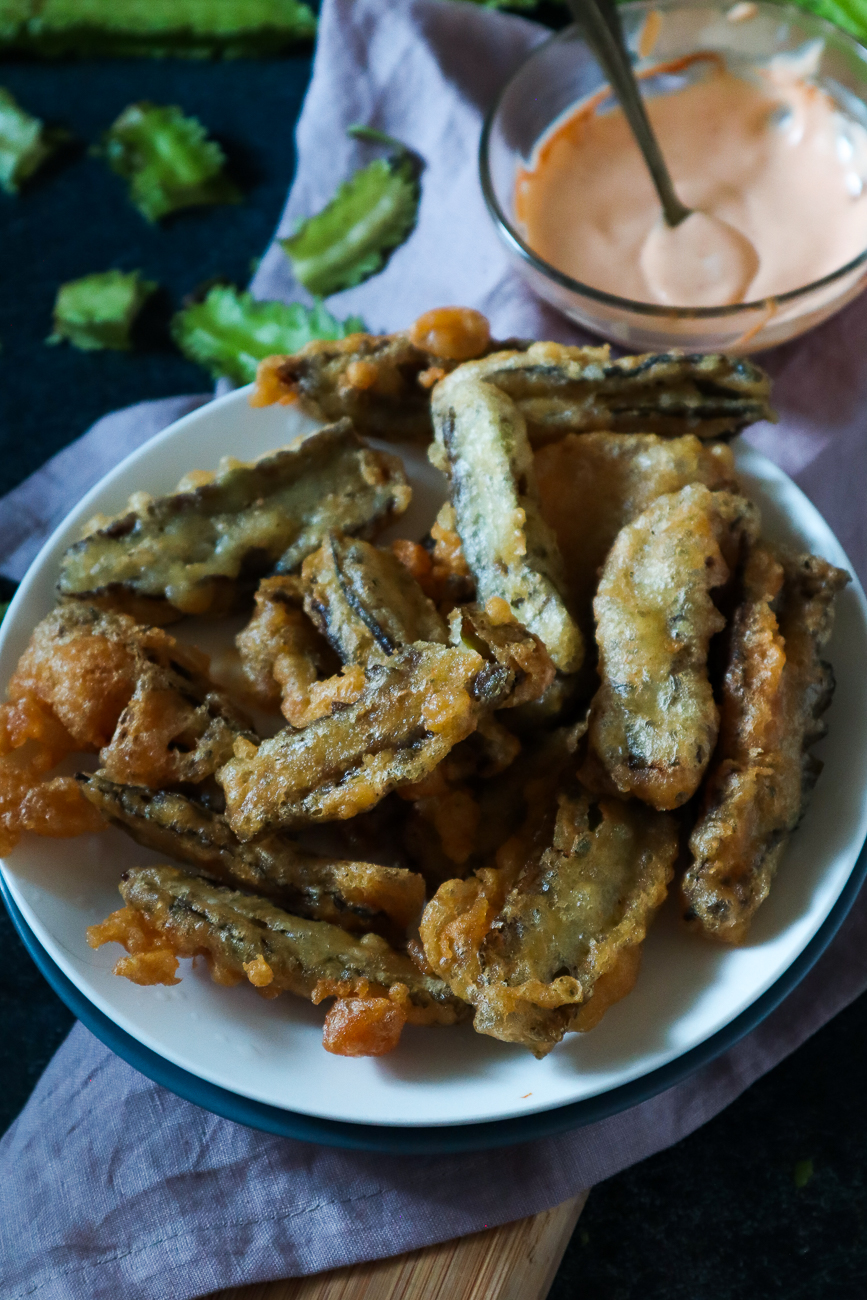
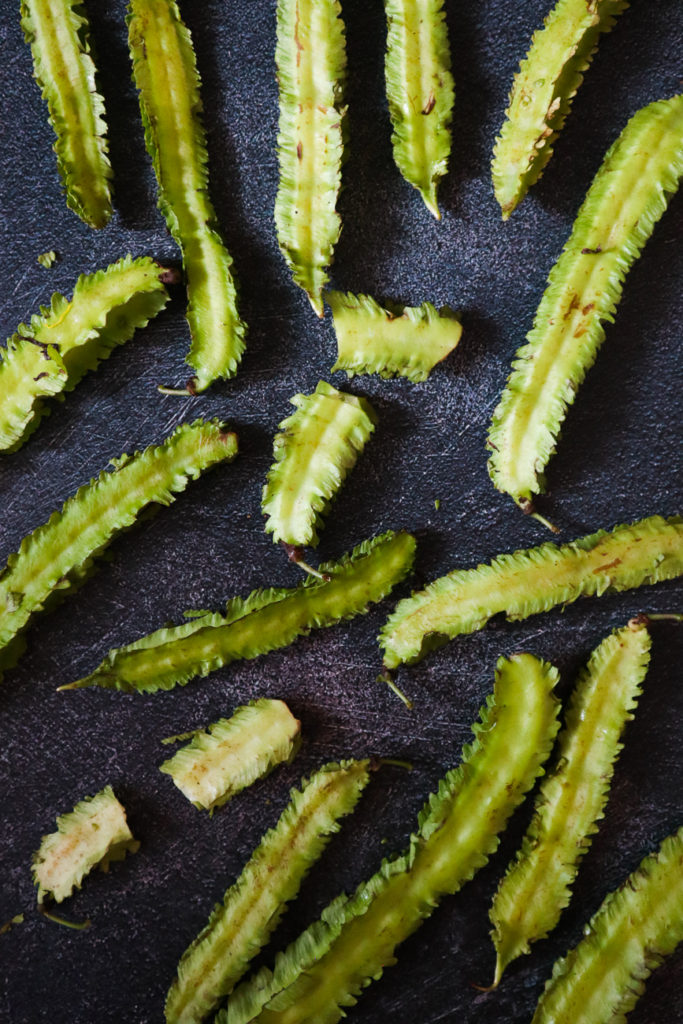
I’ve actually had this idea to make winged bean tempura the moment I tried it by itself – unflavored. Which was about 2 years ago. If you’ve never had winged beans, it is crunchy and has this sweet, slightly peppery, and starchy flavor to it.
From where I live, in the island of Guam, we call this plant sigidiyas. Similarly, in the Philippines, we call this sigarilyas. And my mom would often put this in Filipino cuisines such as sinigang (our version of sour tamarind soup). Growing up, the common way to use these beans are in stir fry and cooking it with coconut milk. For this recipe, I want to show a different way of cooking it. There is such a unique flavor in these beans and I feel that we can definitely play on it more.
So, why tempura? The answer is, why not tempura? While I do not care much for deep fried food on a regular basis, I do love vegetable tempura. Unlike many fried foods that make me feel uneasy after eating, tempura has a “light” and airy crispiness that can be very addicting. In comparison to a heavily battered and fried foods, I can probably go through amounts of vegetable tempura in one sitting. I’ve been practicing on different types of batters to achieve that “airiness” in tempura and I’m proud to say I think I’ve actually nailed it.
THE PERFECT VEGAN TEMPURA BATTER
What makes my tempura batter different? First & foremost, it does not contain any eggs to keep it light and airy. Even if you don’t have any access to winged beans, use this recipe and make use of any vegetables you desire. I’ve achieved the perfect vegan tempura batter by using club soda (or soda water) in replacement of regular water. Why? Because of the carbonation that will help aerate the tempura as it deep fries. Secondly, baking powder which helps bloom the batter as it cooks.
So, do you want to make an eggless vegan tempura batter? Use club soda + baking powder. Done deal.

KEEP YOUR BATTER COLD & FRESH!
One of the crucial steps! THIS STEP IS CRUCIAL! KEEP YOUR BATTER COLD. Achieve the perfect crispy tempura and make sure that your batter is at its coldest when you are ready to fry. If you must, you can store all of the ingredients into the fridge an hour before preparing your dish. Why must we keep it cold? it will help to hold its crispness after cooking. I was able to leave out the cooked tempura at room temperature for about 3 hours after cooking and it still held its crispiness. In addition, since the batter contains carbonated water and baking powder, you want to use it immediately after mixing all of the ingredients. Leaving it for later use may result in a much denser batter.
Short on time or have a warm kitchen? Keep ice cubes on hand in any case your batter needs to be cold.
BLANCH THE WINGED BEANS
The process of blanching is to flash boil any vegetables in high temperature for about three minutes and shocking it in an ice cold water immediately. While it is not a necessary step, I highly recommend that you do not skip it. Why? Because vegetables can easily lose its color and quality once it is cooked in high temperature. Blanching your winged beans will not only help bring out its green color but it will keep its crispiness all throughout the deep frying process. Making your vegetables taste “fresher” even after frying it in oil.
Give this recipe a try and if you like what you see, please help me by liking this recipe or adding a comment in the comment box down below. Follow me on Instagram and don’t forget to tag me when you create recipes!
Vegan Winged Bean Tempura
Equipment
- deep frying pan or dutch oven (ideally between 10" – 11" in diameter and at least 3 quarts)
- small boiling pot
- mixing bowls (at least 3)
- tongs and spatulas
- candy thermometer (optional but highly recommended)
- collander or strainer
- cooling rack
Ingredients
- 1 lbs winged beans also known as sigarilyas or sigidiyas
- 8 cups (64oz) water
- 4 cups (33 fl oz.) cooking oil any neutral flavored of your choice
- ice cubes (optional)
FOR THE BATTER
- 1 cup (128g) + more for coating all purpose flour sifted
- 1 can (355 ml) club soda or soda water really cold
- 1 tsp baking powder
- 1 tsp kosher salt
- ½ tsp black pepper
Instructions
BLANCHING THE WINGED BEANS (OPTIONAL STEP BUT HIGHLY RECOMMENDED)
- Prepare winged beans. Rinse off thoroughly to remove any excess dirt. Cut each winged beans, equally, in half or break apart.
- Bring water to a boil in a small pot. Add a pinch of salt to agitate the water to boil. Once water is bubbling, drop in the beans into the water and allow it to boil for 3 minutes.As you wait for the beans to boil, prepare a "cold bath" for the beans by grabbing a separate mixing bowl; you can use refrigerated-cold water or drop in a few ice cubes in water. The water HAS TO BE COLD.
- Turn off heat. Strain out the winged beans from boiling water and immediately transfer onto the cold bath. This process is to shock the beans to keep its color and crispiness throughout the cooking process. Set aside until ready for use. Is blanching necessary? No. But it is highly recommended. The beans can easily lose its quality overtime as it cooks. Blanching will enable the beans to taste "fresher" and retain is crispiness – which is ideal for tempura. Skipping the blanching method may give soggier results.
PREPARING THE TEMPURA
- Preheat your deep frying pan into medium heat and pour the oil to heat up.
- You will prepare two separate bowls to make the batter. For the first bowl, prepare 5-6 tablespoons of additional flour. This will be your dry ingredient to coat the winged beans with and help absorb any excess liquid so it can stick onto the batter a lot better. On the second mixing bowl, combine dry batter ingredients such as the flour, baking powder, salt & pepper. Mix thoroughly. Gradually pour COLD club soda (or soda water) into the mix and stir. Keep adding club soda until it reaches a pancake batter consistency. IMPORTANT: Keep your batter cold at all times. If you feel that your batter is not cold enough, add a few cubes of ice into the batter and stir – but don't put too much that it waters down the batter. Why should I keep my batter cold? This trick is what gives tempura a light and airy crispiness. You want to make sure your batter is as its coldest when it is ready to fry. Can I save my tempura batter for later if I want to chill it? Not if you everything has been mixed. You want to keep your club soda carbonated and baking powder active for frying. You can chill you mixing bowls, spatulas, and ingredients separately (unmixed in the freezer) an hour beforehand.
- Strain out blanched winged beans out of the cold bath. Pat dry as much as possible. Prepare to start coating the beans in batter. Start by tossing each winged bean with the dry flour ingredient. Toss around until each bean is floured on all sides. Then, dip the bean into the wet batter. Make sure it is evenly coated on each side. NOTE: Prepare one at a time as you are frying.
- Once your oil is ready, drop the battered winged beans into the pan and fry until golden brown. This should take between 3-5 minutes depending on your stove. Do not over crowd your pan. You may have to do multiple batches depending on the size of your pan. IMPORTANT: Test if the oil is ready fry by dropping a pinch of batter on the hot oil – if it bubbles, it is ready. HOWEVER, the best way to determine is to have a candy thermometer to check the frying temperature. The optimal frying temperature will be between 345°F – 360°F.
- Remove from the oil and place on a cooling rack to evenly cool down. Using a cooling rack will keep air circulating and help the tempura retain its crispiness. Cooling it down on a flat surface with a paper towel will make the tempura soggy. Best served when fresh with a side of vegan sriracha-mayonnaise dip (see notes).
Notes
- Sriracha mayo dip – mixing vegan mayonnaise and sriracha together. I normally use a 1:2 ratio (dominantly sriracha) but if you are not a fan off heat, a 1:1 ratio will work best.
- You may also use the traditional tempura sauce (which can be store bought or homemade). Just be on the lookout for fish ingredients.
I received my Farm Fresh Produce from Guåhan Sustainable Culture. An organization that strive toward food sovereignty and food security for a healthier and sustainable living. For every (3) weekly produce bag they sell, they donate (1) to a family in need. If you are living on Guam, please help support and buy local produce, support local farmers, and shop small.
This is, in no way, a sponsored or associate post. I purchase all ingredients myself and believe in what the organization stands for.
