
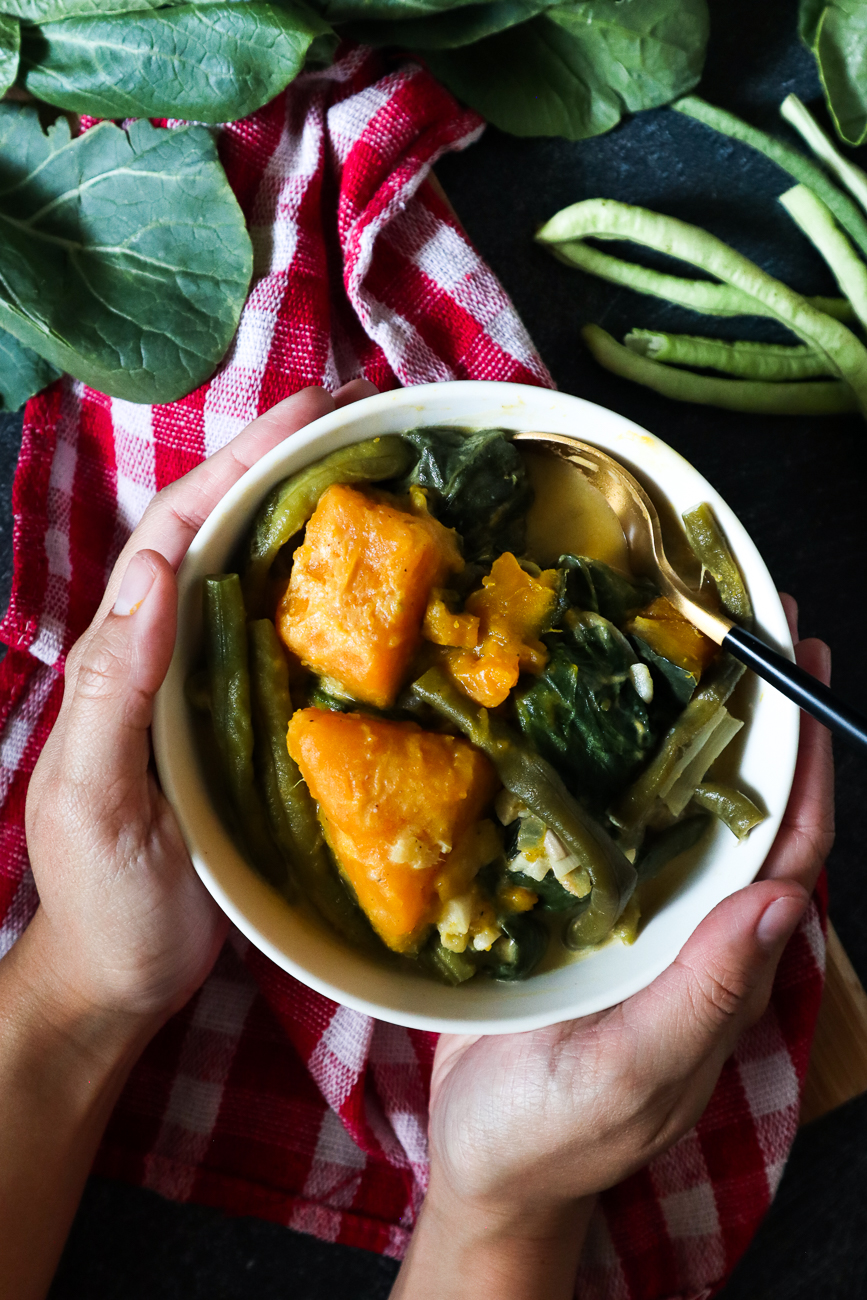
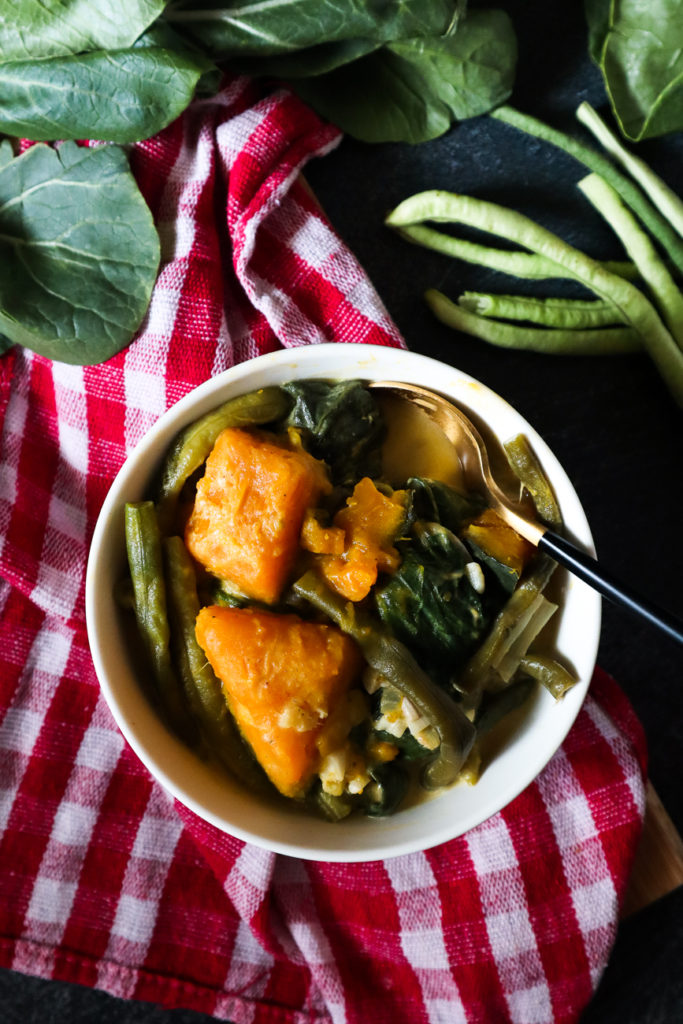
We are experiencing some heavy rains on island these past few days. Which can only mean, we have cozier evenings inside. Hence, I’ve decided that for my next recipe, I’ll be recreating a family favorite which is ginataang kalabasa (or Filipino coconut squash stew). Three things to love about this recipe: it’s very easy to make, it’s healthy, and it’s very comforting.
If you live on Guam (or familiar with our weather), as I publish this, it’s probably already sunny because I’ve mentioned the rain. Yep, we have bipolar weather. I just want to put that in as a disclaimer. Either way, this recipe is great for any weather.
WHY A COCONUT STEW?
Living in the tropics, the use of coconut milk in stews and broths are very common. Most often, if you visit a Filipino kitchen – you will find coconut milk, long beans, bird’s eye peppers, a whole lot of garlic, and ginger. This dish in particular, ginataang kalabasa (pronounced as geenah-ta-ang kah-lah-bah-sah), is something my parents would make on a regular basis. I grew up eating kabocha squash and long beans in coconut milk for as long as I can remember. Traditionally, this is served with shrimp or pork. For this recipe, we’ll be keeping it wholesome, using all fresh vegetables without losing its traditional flavors.
Sure enough, if you want to make this dish even heartier, feel free to add your favorite sources of plant protein such as tofu, tempeh, chickpeas, soy curl, and even textured vegetable protein. My family would often pan fry seasoned tofu and drop it into the stew which is amazing!

Kabocha Squash
To me, kabocha squash is an underrated sibling of butternut and acorn squash. With all the speckled greens of the outer layer and rough texture, compared to a butternut squash which is like the popular girl in school everyone pays attention to. No hate here, I eat all kinds of squash. But did you know? Kabocha squash is actually a great source of Vitamin A; which helps maintain hair, nails, skin, and eyes. Like many plant sources, it is also high in fiber, wholesome carbohydrates, and iron. In my opinion, it is buttery, sweet, and hearty. Don’t skip out on using kabocha squash, add it to any coconut stew.
And if you don’t have kabocha squash made available where you are, the other squash siblings will be just fine.
PRO-TIPS BEFORE COOKING
- This recipe calls for a whole Kabocha squash. It is HIGHLY RECOMMENDED that you use a sharp knife to cut it open. This squash can be tough! Using a dull knife can be more dangerous.
- Blanch the long beans. While this step is not necessary, I recommend that you do not skip it. Like any plant produce, it loses its quality once it is cooking in high temperature. In order to retain its vibrant color and crunchy texture, blanch it before cooking. I’ve tested beans without blanching it and it has a tendency to overcook quickly or it becomes too soggy if you reheat it.
- Serve it with rice and something very savory to go with it. If you want a full on Filipino cuisine, you may serve it with either a side of black bean garlic paste to compliment the sweetness of the squash or make the classic vegan bagoong recipe.
- Want to make it to a heartier meal? Add your favorite plant protein to the dish – tofu, tempeh, chickpeas, and even textured vegetable protein.
Give this recipe a try and if you like what you see, please help me by liking this recipe or adding a comment in the comment box down below. Subscribe to my mailing list for exclusive newsletters. Follow me on Instagram and don’t forget to tag me when you create the recipes.
Coconut Squash Stew (Ginataang Kalabasa)
Equipment
- soup pot
- sharp knife
- Mixing bowl
- Spatula
Ingredients
- ½ large kabocha squash deseeded & chopped
- 1 lb (2 cups) long beans chopped into 2" in length
- 1 lb (2 cups) pechay (or bok choy) roughly chopped
- 4 cloves garlic crushed & minced
- ¼ inch thick ginger minced
- ½ medium yellow onions
- 500 ml (2 cups) coconut milk full fat
- 1 cup vegetable broth or water
- 2 small bird's eye chili optional
- 1 tsp fresh calamansi or lemon juice optional
- salt & pepper to taste
Instructions
GREEN BEANS BLANCH INSTRUCTIONS (OPTIONAL)
- Prepare water to boil over a stove top in medium high heat. Wait until water bubbles. On a separate mixing bowl, pour ice cold water to prepare a water bath. Set aside.
- Once the water is boiling, drop in the chopped long beans. And allow it to bowl for about 3 minutes. Turn off the heat and strain the long beans from the hot water.Immediately drop long beans into the ice cold water to shock. Stir until each bean has submerged in cold water. Your beans should look a little vibrant in color and retain its "crisp" even after cooking when you bite into it.
FOR THE STEW
- Prepare kabocha squash by roughly chopping it into (about 2-inch) cubes. If you are using a whole kabocha squash, cut the squash in half using a sharp knife. Deseed the half you will use and store the other seeded half covered for another time. Then chop into pieces. NOTE: You may peel the squash if you desire beforehand, but using kabocha sqush, I personally leave the skin on as it tenderizes when being cooked. Just make sure it is rinsed off thoroughly.
- Preheat a soup pot to medium heat. Coat the pot with about a tablespoon of oil. Once the pot is heated, sauté onions, ginger, and bird's eye chili pepper until mixture is shimmering and fragrant. Add the garlic and stir. Season with a pinch of salt & pepper.
- Drop in the squash and sauté for a minute with the aromatic flavors. Pour in the water and half the portion of the coconut milk. Stir and place the lid onto the soup pot. Allow it to simmer for about 7-12 minutes (or depending on how hot your stove top is) to tenderize the squash. Check in between to stir. You will know your squash is ready is if you can run a fork through it smoothly.
- Drop in the long beans and stir. If you have blanched your beans beforehand, strain out from the ice cold water and ensure to drain out all the excess liquid. Allow it to simmer for another 5 minutes. Pour the rest of the coconut milk.
- Turn off heat. Add the chopped pechay (or bok choy) and fold into the stew until it shrivels or well combined with the rest of the ingredients. Season with a little bit of salt & pepper to taste to finish and squeeze about a teaspoon of fresh calamansi or lemon juice to balance the flavors together.
- Best served with rice and a side of vegan bagoong.
Notes
