
If you are new to my blog, let me reintroduce you where I am from. Håfa Adai (or hello / greetings)! I was born, raised, and currently living in the island of Guam; Guåhan in CHamoru. CHamoru is the proper spelling and term to call the indigenous people on Guam. Guam is a U.S. Territory in Micronesia, of the Western Pacific. I’m a daughter of Filipino immigrants, with my family settling on island for years before I was born. I’m not CHamoru but Guam is what I call home. Apart from Filipino and Asian cuisines, I grew up eating CHamoru food as it is commonly around in any special occasions or gatherings.
In addition, there are many influences between Filipino and CHamoru culture. Most, especially, with food because we are so close to The Philippines. There are theories that the indigenous people of Guam were from parts of the Philippine islands. And, historically, Both Guam & the Philippines were colonized by the Spanish for over three hundred years; so from food and language, there are hints of similarities. Not the same, or ever identical, but similar.
MARCH IS CHAMORU MONTH
For this week, I want to give the spotlight to CHamoru month. Which is a month long celebration for the CHamoru heritage. I have recipes such as the Tofu Kelaguen (which most of my wonderful audience probably know by now) and the Gollai Hågun Suni, that I feel would be appropriate to piece the dishes together into one big fiesta dish! If you aren’t familiar with living on Guam, our culture is all about the community, looking after one another, and celebrating in the smallest ways. We, also, have the best beaches and sunsets (I will argue with anyone who says otherwise) – which is probably why (not a fact but evidence, haha) we, probably, love to go out and have outdoor barbecues by the beachside.
COMPONENTS OF A FIESTA PLATE
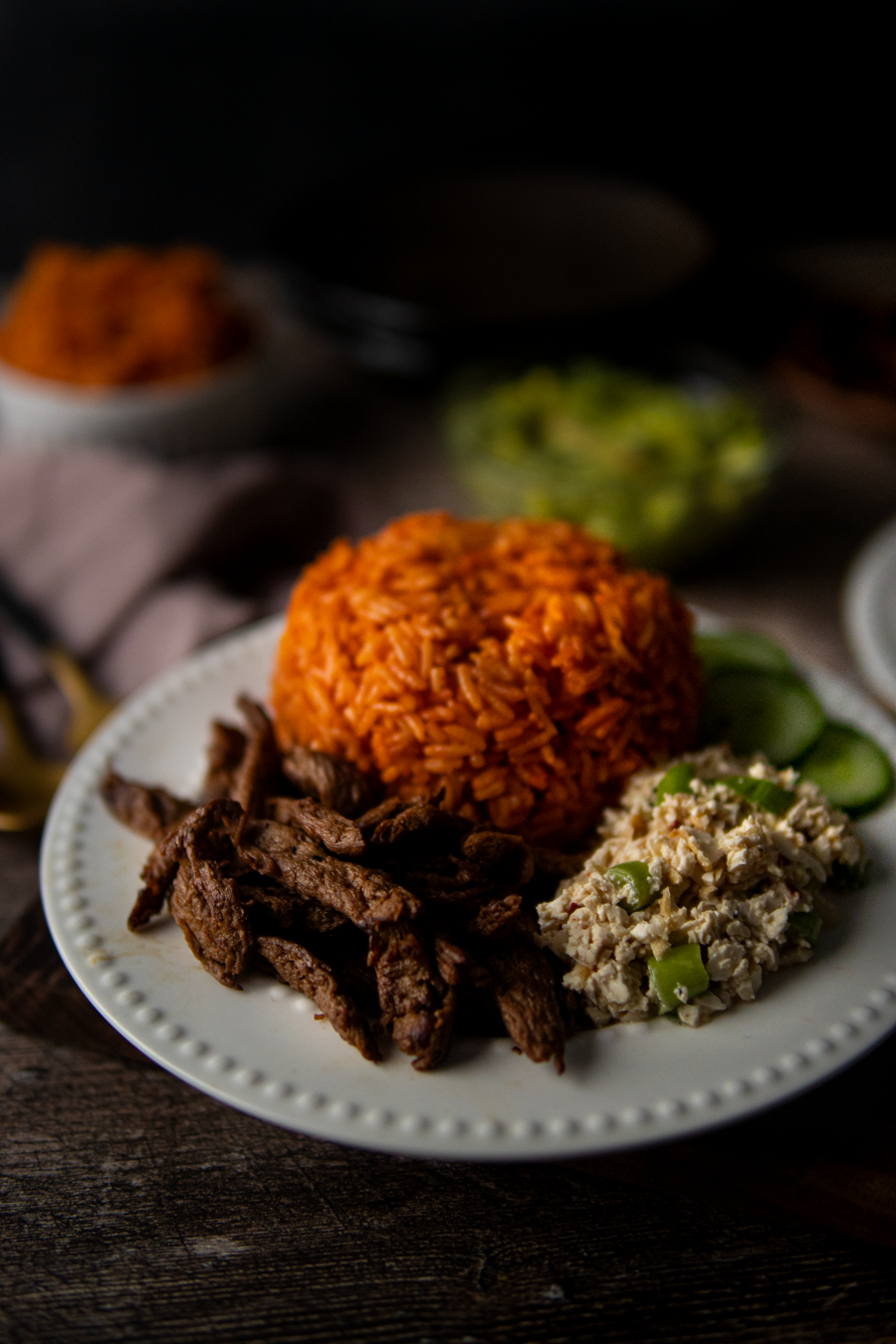
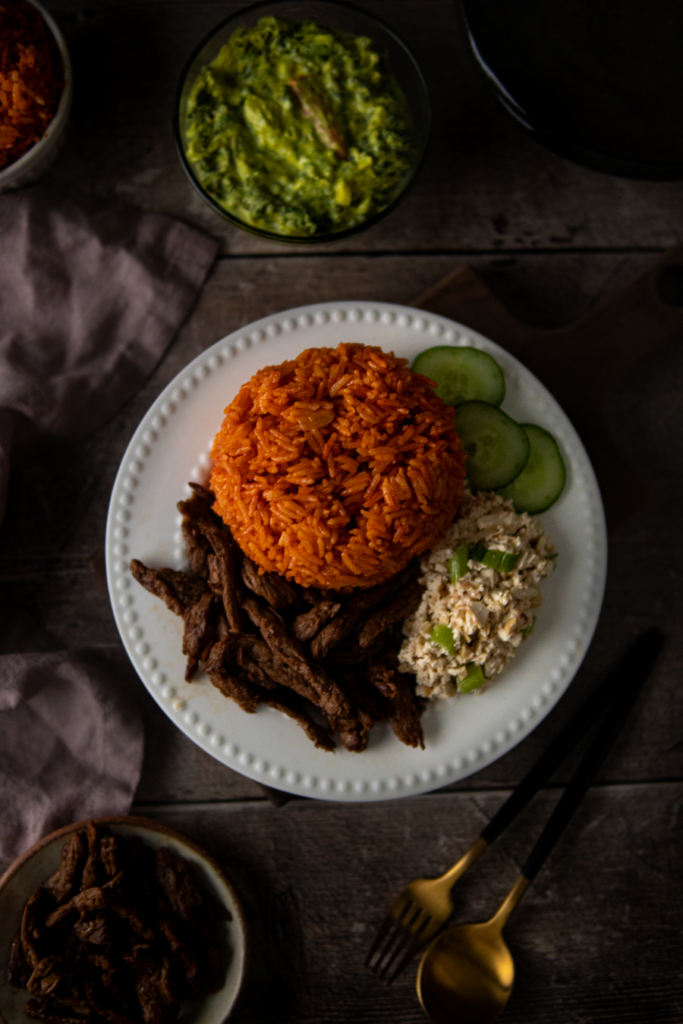
While every household or families have their takes on a fiesta spread, one certain holds for sure in a Guam fiesta, it is not a party until there is red rice, some kind of barbecued meat, a dish with coconut milk, and kelaguen. Going to throw in my lumpia recipe here too because that is also a favorite. Let’s break down the components, shall we?
- Red rice – vibrant in color from annatto seeds – which is often used as a natural food coloring in most Pacific island recipes. Don’t be deceived, just because it’s red, doesn’t mean it’s spicy or strong in flavor. Often times, flavor is mild (depending on who prepares it) and usually cooked in annatto (achuete) water with some onions, garlic, salt & pepper.
- Barbecue – Usually made with meat but for this version of a fiesta plate, it is completely vegan. I used soy curls (my favorite “meat” substitute for the subtle taste). Marinated in a soy-based broth as the base. There are many different versions of how to marinade barbecue on island (some would even use carbonated beverages for sweetness). My family uses fresh oranges to give a nice citrus, sweetness.
- Kelaguen – Marinated protein in lemon juice. Be sure to check out my tofu kelaguen recipe!
- Gollai Hågun Suni – Creamed spinach in coconut leaves as a side dish. Be sure you check out my recipe for this as well if you want to complete fiesta experience!
TOP TIPS MAKING THIS PLATE
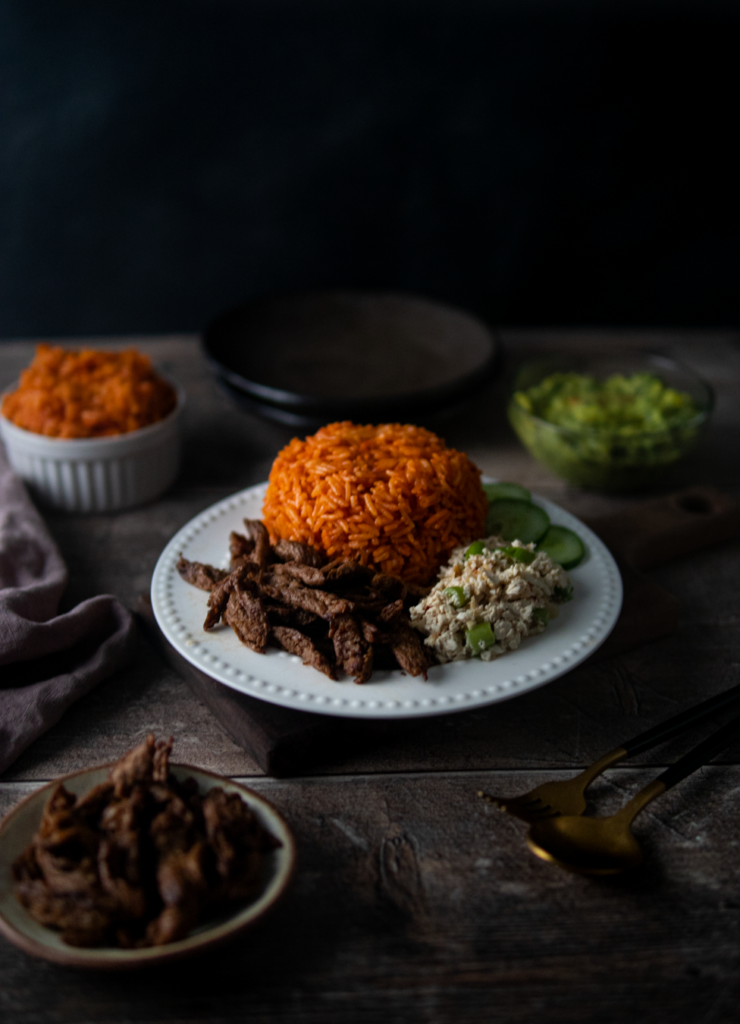
- If you plan to make everything from the kelaguen to the barbecued “meat”, I recommend making the kelaguen and Gollai Hågun Suni in advance to save time. You can make as early within the night before.
- Use a rice cooker or instant pot to make your life easier when making the red rice. Traditionally, you cook it on a pot. I might get judged by my family, friends, and other elderlies BUT if you are busy like me and plan on making a bulk, the rice cooker will be your friend. Plus, it’s so much easier to control the heat for an even cook. Guam peeps, don’t judge me, I know how to cook both ways!
- Simmer the soy curls in its marinade on low heat before grilling. This will MAXIMIZE the flavors and allow the sauce to absorb in the soy curls fully.
- Use a grill pan and cook on fire (or outdoor grill, preferably) for the the true barbecue taste! You can always use a cast iron or griddle and cook on high heat. I do not recommend baking or using a non-stick in medium heat. It won’t taste like barbecue.
- If you don’t have soy curls to make the barbecue strips, you can also use any vegan meatless substitutes of your choice (usually best with chick’n or beef strips). Though, just be mindful, some substitutes have weird distinct after tastes.
Give this recipe a try and if you like what you see, please help me by liking this recipe or adding a comment in the comment box down below. Subscribe to my mailing list for exclusive newsletters. Follow me on Instagram and don’t forget to tag me when you create the recipes.
ADD THESE DISHES TO YOUR FIESTA!
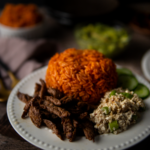
Vegan CHamoru Fiesta Plate
Equipment
- Rice cooker or boiling pot
- Sauce pans or shallow sauté pan
- Mixing bowls
- Spatulas
- grill pan / cast iron or flame grill
- sieve
- grilling brush or spatula
Ingredients
FOR THE RED RICE
- ⅓ medium (⅓ cup) yellow or white onion diced
- 3 cloves (2 tsp) garlic minced
- ½ tbsp olive oil or any cooking oil
- 1 packet (10g) achuete powder annato powder or the Mama Sita Achuete Powder packet
- 2 cups Jasmine rice thoroughly rinsed and drained
- 2 cups vegetable broth or water
- pinch salt & pepper
FOR THE BBQ Strips
- 1 cup soy curls soy chunks or any flavorless meatless substitutes
- 1½ cup hot water
FOR THE BBQ MARINADE
- 2 cloves (2 tsp) garlic minced
- ¼ medium (¼ cup) yellow or white onion diced
- 1-2 medium (1-2 tsp) red hot pepper (Bird's eye chili)
- ¼ cup water
- ½ cup low sodium soy sauce (or tamari for gluten free option)
- ½ tbsp dark mushroom soy sauce (optional for color and deep flavor – see notes)
- ⅓ cup white vinegar
- ¼ cup orange fresh squeezed
- 3 tbsp brown sugar
- ½ tsp black pepper
- ¼ tsp kosher or sea salt
FOR THE COMPLIMENTARY SIDE DISHES (OPTIONAL)
- Vegan Tofu Kelaguen (see notes for recipe)
- Gollai Hågun Suni (see notes for recipe)
Instructions
FOR THE RED RICE
- Preheat a boiling pot to medium or rice cooker (I used my instant pot to cook the rice so it is evenly cooked). Grease cooker or pot with oil. Start cooking by sautéing your onions and garlic. Toss around until fragrant. Season with a pinch of salt and pepper.
- Toss the (rinsed and fully drained) rice into the pot and mix to toast the rice for about 3-5 minutes. Then, add the achuete powder and stir until it dissolves and opens up the color into the rice. Stir until it fully coats the rice.
- Add the vegetable broth and stir thoroughly. If you are using a stovetop and cooking with a pot, cover with a lid and set the heat to low to avoid burning the rice or having it unevenly cook. Remember, rice contains a lot of starch (with the added annato powder that usually contains corn starch), the higher your heat – the faster it evaporates the liquids. Slow cook the rice on the stove top and stir occasionally to make sure it does not stick on the bottom. If you are using a rice cooker, set on normal cook setting and stir rice once it is finished steaming.
- Allow to cool down for 5-10 minutes before serving.
FOR THE BBQ STRIPS
- Rehydrate soy curls or any dehydrated meat substitutes in hot water for 5-10 minutes. Drain and squeeze out all the liquids it absorbed, as those are not needed. If you are using frozen meat subtitutes, be sure to defrost at least 30-45 minutes beforehand in the fridge and pat out any excess liquids.
- Preheat a sauce pan in low heat. Drop all marinade ingredients such as garlic, onion, chili, soy sauce, vinegar, water, sugar, salt, pepper, and freshly squeezed orange juice. Stir thoroughly until well combined.
- Drop soy curls or meat substitutes into the sauce pan. Allow it to simmer on low heat between 15-20 minutes, stirring it between. The point is not to overcook the soy curls but to allow it to absorb the flavors of the marinade. You can taste test the soy curls to see if the flavors have been absorbed enough to your liking.
- Turn off heat and transfer soy curls (with marinade) to a mixing bowl.
GRILLING THE BBQ STRIPS
- I used a grill pan on fire to cook these strips so it is cooked on high heat. You can also use a cast iron skillet or griddle in high heat to get a similar "charred" barbecue flavor.
- Brush pan or skillet with a light coat of oil. Strain soy curls from the marinade, reserving some of its liquids for basting or brushing as you grill.
- Grill the soy curls in high heat and let it sizzle for about 3-5 minutes on each side or when it caramelizes in a brown toasted color. Brush or baste with its marinade to prevent it from drying. Remember, this is not meat and you don't have to cook it too long. It should take between 5-10 minutes in high heat.
SERVE
- Serve BBQ strips with the Red Rice, Tofu Kelaguen, and Gollai Hågun Suni for a complete CHamoru fiesta dish. Enjoy!
Notes
- Find my Tofu Kelaguen Recipe here.
- Find my Gollai Hågun Suni Recipe here.
- Dark mushroom soy sauce gives the strips a nice finishing color and an added savoriness. You can find dark mushroom soy sauce in Asian Supermarkets. If you are from Guam, I get mine at American Grocery.
- I get my soy curls on Amazon and buy in bulk. If you live on Guam, you can find soy curls at Simply Foods. You can also use other vegan meat substitutes though I find the frozen ones (found in supermarkets) have a distinct after taste.
