

Ahh, the classic Filipino-style adobo, it is the ultimate staple in Filipino cuisine. In every Filipino household, there never comes a time when someone would not brags about their family’s adobo recipe. I kid you not, we will always claim that my mom’s adobo is the best! Want to know the real truth though? EVERY MOM’S ADOBO IS THE BEST ADOBO! Because, one, it is made with love. And, secondly, that is family LEGACY in a plate. Every version of the dish is special, but it all comes down to one true fact – this is our national dish and we all take care of it! This is why, I’m going to share my family’s version.
ADOBONG CAVITE
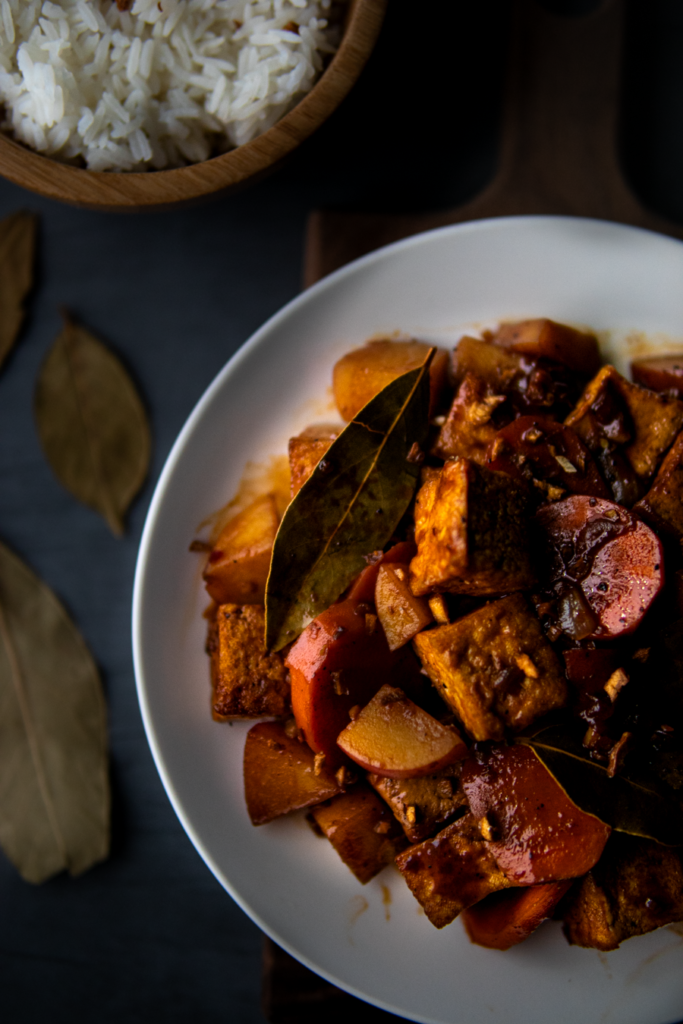
My parents both grew up in the province of Cavite, Philippines. Cavite, pronounced as kah-vee-teh. Their family house, in fact, are just a few blocks away from each other in a small town. I had the opportunity to live in that small town while I was studying in a university. Having that said, adobo looked a little different from where my family originated. Unlike, most adobo recipes, adobong cavite, has a red-orange hue. The color comes from the use of annatto powder (or achuete), or powder that derives from annatto seeds, a natural food dye from achiote trees. Aside from its red-orange hue, from what I’ve always known, the adobo is known to be slightly sweeter and less acidic from vinegar. It was more garlicky and on the savory side. This is why, for the longest time I grew up eating adobo, I never really understood a sour broth.
WHAT IS FILIPINO ADOBO?
Do not mix Filipino-style adobo with Mexican adobo. These are two different dishes, though both influenced by the Spanish – meaning marinade or sauce. In Philippine cuisine, adobo is often made with any source of protein marinaded in vinegar, soy, bay leaf, garlic, and peppercorn. The protein is usually seared to caramelize in color, then braised to simmer in the sauce. Many households, including mine, have different versions of adobo. Some households would add vegetables to make the adobo much filling, others may add more garlic. Again, my family was more on the garlic-tasting flavor profile, with a slight hint of sweetness. Because I’m making a vegan version of this dish, it will be a mix between my family’s version and some added vegetables to make it more filling.
USING ACHUETE OIL
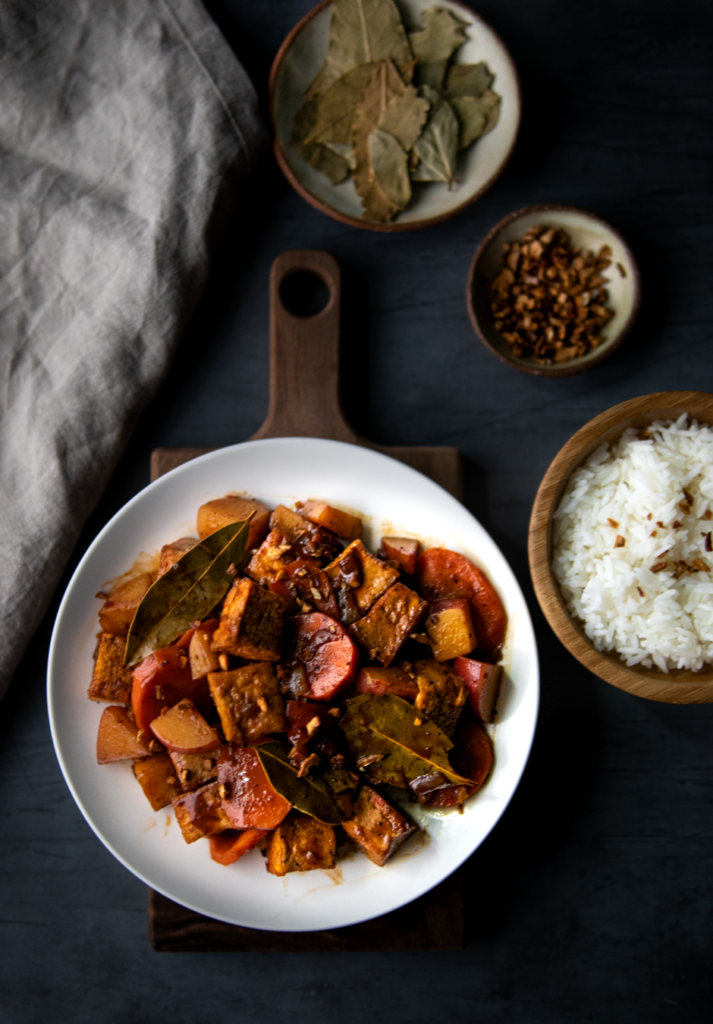
As I’ve mentioned red-orange hue of the dish, this is actually due to the achuete oil. Achuete oil, or annatto seed oil, is a process of whisking annatto powder and oil together. Nothing complicated, it is used to sauté the dry ingredients. This will give the, overall, look of the dish much vibrant.
You can also check out how to make annatto red rice with my Vegan CHamoru Fiesta Plate here.
KEY INGREDIENTS
Making adobo is fairly simple. What I love about it, is that it is perfect for meal preps and easy dinners. And because ingredients are vegan, process of cooking it is even, a lot, faster! Here are the key ingredients to make this recipe:
- Tofu – as the main source of protein for this recipe.
- Potatoes & Carrots – As the complimentary veggies for adobo. I’ve also made this recipe with mushrooms and kangkong (water spinach). Any vegetables you desire may work just fine.
- Annatto Powder – also known as achuete or achiote powder, which you can find in many Asian or Filipino stores.
- Soy Sauce – I used low sodium soy sauce for this recipe.
- Cane Vinegar – I find that the Filipino brand “Datu Puti” works best as it has a cleaner acidic taste. It is also perfect for adobo. Any white distilled vinegar will do, as well.
- Bay Leaves – To give the distinct, aromatic flavor of adobo.
- Whole peppercorn – or if you are not a fan of whole peppers, crushed peppercorn will work as well.
- Lots of garlic – because no adobo is complete without it.
- Vegetable Broth – just to make it a bit more saucy and balance out the flavors of the soy sauce and vinegar.
TOP TIPS TO COOKING THIS DISH
- Add garlic crisp – for garnish to make it a tastier adobo. While this is optional, I highly recommend it. See recipe below on how to make it.
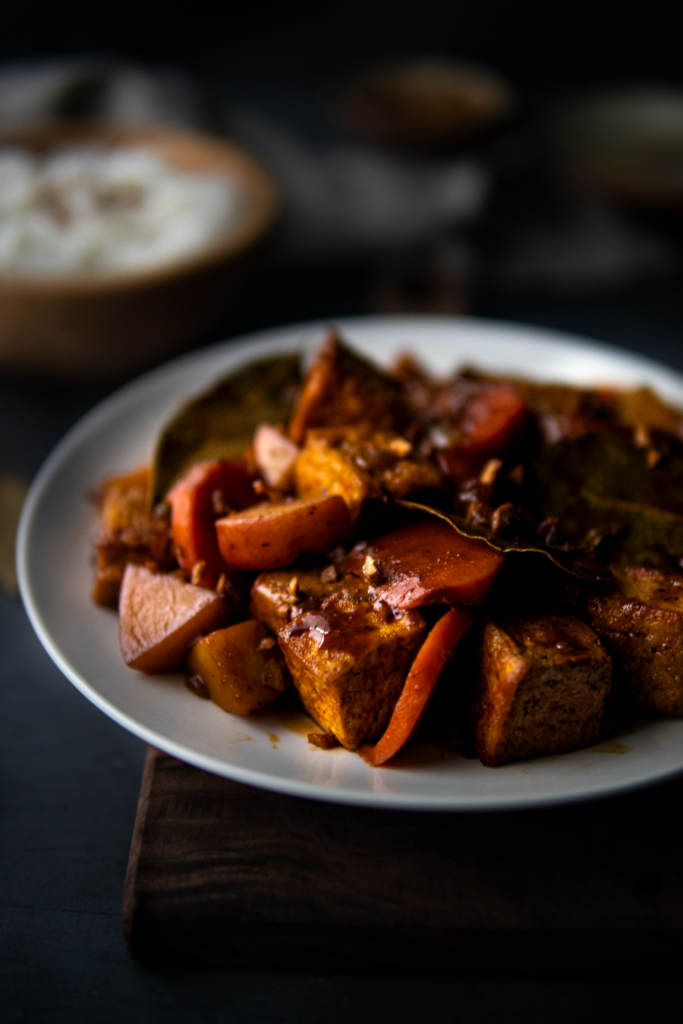
- Pan fry the tofu first – before you allow it to simmer in broth. The texture will be better, overall, and Be sure to remove any excess moisture and pat dry before cooking. Season on each side with salt & pepper so that the tofu has its own taste initially.
- Use any vegetables you’d like – because this is a vegan version of adobo, adding a few vegetables or starchy ingredients will make it more filling. I ought for potatoes and carrots, as it’s the most versatile and used in Filipino cooking. However, I’ve made this recipe with the addition of kangkong (water spinach) and mushrooms, which tasted great as well!
DO YOU LIKE THIS RECIPE?
You may also enjoy the following:
- Vegan Filipino Style Tapa
- Vegan CHamoru Fiesta Plate
- Vegan Arroz a la Cubana
- Vegan Lumpiang Shanghai
- Vegan Menudo
Give this recipe a try and if you like what you see, please help me by liking this recipe or adding a comment in the comment box down below. Subscribe to my mailing list for exclusive newsletters. Follow me on Instagram and don’t forget to tag me when you create the recipes.
Vegan Filipino-Style Adobo (Adobong Sa Achuete)
Equipment
- large sauté pan with lid
- Spatula
- sharp knife & cutting board
- small mixing bowl & sauce bowl
- tiny whisk
Ingredients
ACHUETE OIL
- 2 tbsp cooking oil (such as vegetable or canola)
- 2 tsp achuete or annato powder
FOR THE SOY BROTH
- ½ cup low sodium soy sauce (or tamari for gluten free)
- ⅓ cup cane vinegar
- ¼ cup vegetable broth (see notes)
- ½ tbsp brown or white sugar
FOR THE DRY INGREDIENTS
- 1 block (14oz) extra-firm tofu pressed & patted dry
- 5 cloves garlic minced
- ¼ small (¼ cup) yellow onions diced
- 1 small (⅓ cup) carrot thinly sliced
- ⅓ cup red skinned potatoes diced
- 2-3 pieces dried bay leaves
- 2 tsp whole peppercorn
- salt & pepper to taste
- ½ tbsp oil (for frying tofu)
OPTIONAL TOPPING
- garlic crisp (see notes for preparation)
Instructions
FOR THE ACHUETE OIL
- Using a sauce bowl, whisk together achuete powder and oil until lumps are gone. Set aside for later use.
FOR THE SOY BROTH
- Using a small mixing bowl, pour liquid ingredients such as the soy sauce, vinegar, vegetable broth, and sugar. Whisk together until well combined. Set aside.
FOR THE DRY INGREDIENTS & ADOBO PREPARATION
- Preheat stovetop and sauté pan to medium heat.
- Pat dry tofu and make sure to press as much excess liquid as you can. Dice into bite sized cubes. Season with a pinch of salt & pepper on each side.
- Once the pan is fully heated, coat with ½ a tablespoon of oil. Pan fry tofu on each side until it is golden brown. You don't have to make it super crispy, just enough to give it color.
- Remove tofu from the pan. Then, using the achuete oil, coat the pan until it is heated.
- Saute garlic into the achuete oil until fragrant. Then add the onions, carrots, bay leaves, and potatoes. Stir then let it sit for at least 6-8 minutes or until potatoes have softened, stirring it in between occasionally.
- Toss the tofu back into the mix. Along with the black peppercorn. Season with a pinch of salt. Stir and let it sit for another 4-5 minutes turning the heat down to medium low. Gradually add half of the broth to simmer.
- Allow the ingredients to simmer in broth until it slightly reduces and tofu has absorbed some of the liquids. Stir occasionally. Turn the heat to low and add the remaining broth. Let it simmer, once more, with the lid covered for about 4-6 minutes or when potatoes & carrots have slightly softened.
- Turn off heat. Top with garlic crisps (optional)
Notes
- For the garlic crisp: Preheat a frying pan on medium heat and generously coat in oil (about ⅓ inch deep). Toss in the minced garlic (about 6 cloves or 2 tbsp) to slowly fry and stir around every minute to prevent it from burning. If you wish to add heat, add a tablespoon of red pepper flakes into the oil and stir. Continuously stir until garlic becomes golden brown and crispy. Be careful, if you feel that your stove top is getting too hot, lower down the heat. Over frying the garlic will make it bitter. This process may take between 5-10 minutes depending on your stove top. Strain garlic from the oil and let it cool. It will crisp up as it cools down.
- For the vegetable broth: I stirred two tablespoon of vegetable paste + 1/4 cup water to create veggie broth. You can always use regular vegetable broth or an equivalent with a vegan / chick’n bouillon cube.
