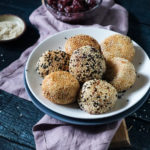
Buchi (Sesame Seed Balls)
Servings 12
Equipment
- kitchen scale (optional but highly recommended)
- Mixing bowls
- Spatula
- deep fry pan
- sauce pan
- kitchen towel (damp)
- cooling rack
- measuring spoons
- candy thermometer (optional)
Ingredients
- 2 cups (283g) glutinous rice flour
- 1⅓ cups (400g) sweetened red bean paste chilled (see notes)
- 1 cup (250g) water
- 1 tsp kosher salt (sub ½ tsp for fine regular salt)
- ½ cup (220g) organic cane sugar
- 1-2 cups oil for frying
- sesame seeds for coating
Instructions
DOUGH PREPARATION
- Using a sauce pan, heat a cup of water to boil on a stove top in medium heat. Once the water has boiled, turn off the heat. Dilute sugar into the boiling water and stir until well combined. Let it sit for about 3-5 minutes.
- In a mixing bowl, whisk rice flour and salt together. Using a spatula, dig a shallow well into the center of the flour mixture. Gradually pour half of the sugar water little by little. Do not pour the water all at once. Stir dry and liquid ingredients together (using your hand to mix to make a dough may be necessary). Massage the flour and water mixture to make sure all the dry spots are hydrated. If your dough still falls apart, add a tablespoon of water at a time.Knead until it forms a smooth ball of dough.
- Allow your dough to rest for 15 minutes before handling. Cover with a damp kitchen towel from prevent it from drying out.
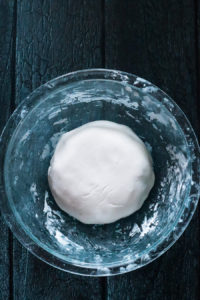
- Once you've allowed your dough to rest, divide it to twelve (12) equal pieces. You can eyeball the size to the best of your ability. If you are precise, using a kitchen scale, weigh in the total of the dough. Then divide that weight to twelve (12). Each of my pieces, for example, rounded to 45g each. These should give the perfect snack bite pieces. Cover with a damp kitchen towel to prevent it from drying out.
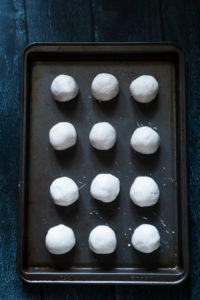
BUCHI ASSEMBLY
- Prepare the red bean paste (see notes)
- Using slightly damp hands, gently press each piece of dough to flatten. You do not need to flatten the dough super thin (which is not recommended because it will crack). Just spread it enough to make space for the filling.
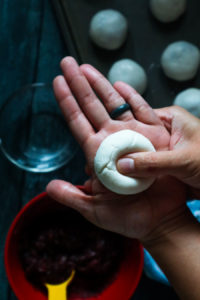
- Fill the dough with red bean paste. Amount of paste is up to you, however, do not overfill the dough as it will be harder to secure the folds and will create a mess. For your reference, I was able to fill (more or less) half a tablespoon on each piece. Slowly fold each section of the dough.
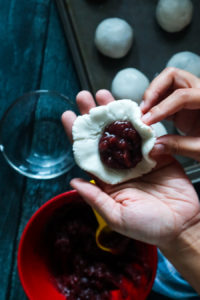
- Gently secure the fold into a ball. This might be a little challenging if you are not used to handling gluten free dough. In comparison to the commonly used wheat dough, there is a gluten build up that allows the dough to be elastic and strech without tearing (making it easier to handle). For the rice dough, because there is no gluten build up, it can crack easily if you are not careful. To make it easier, use slightly damp fingertips as you secure. Be sure that there are no unwanted cracks or opening as dough might burst when frying.
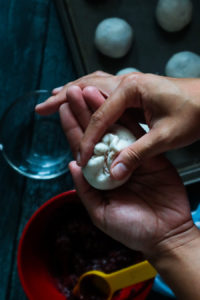
- Gently roll the filled dough on the palm of your hands until surface is smooth and forms an even circle. It doesn't necessarily have to be perfect but as long as it is as smooth and secured as it can get. Repeat process on each piece.

- Lightly dip each dough ball into water on all sides. This is so that the sesame seeds are able to stick onto the dough.
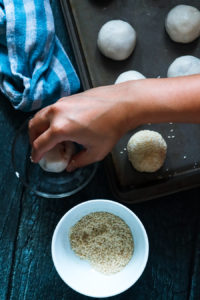
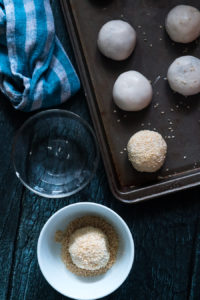
- Coat each piece evenly with sesame seeds.
FRYING INSTRUCTIONS
- Prepare deep frying pan on a stove top and preheat to medium hight heat. Pour about 1-2 cups of cooking oil OR at least 1 inch deep on the pan. You can dip a skewer or chopstick to determine if oil is ready. If it bubbles naturally, it means it is ready. If it bubbles aggressively, it means oil is too hot and you will have to lower it down again before using.If you have candy thermometer, optimum frying temperature would be between 340°F - 360°F.
- Drop each sesame ball into the oil. Do not overcrowd the pan, work in batches if needed. Fry until each side are golden brown and crisp. This should take about 4-7 minutes depending on your stove top.
- Strain from the oil. Let the sesame ball cool on a cooling rack. Best served while it is still fresh and hot.
- Enjoy!

Notes
Use a kitchen scale for best results. Most of my cup measurements are based on conversions and the closest estimate to the weight in grams.
Red Bean Paste - for this recipe, I've used ready-made red sweetened red bean paste to save on time which I bought at Tokyo Mart in Tamuning (if you are living on Guam). Other names for red beans include adzuki beans, anko, or red mung bean. If you end up finding an unsweetened version of red bean paste. Heat up on a stove top to low and gradually add sugar (amount is to your liking) to dissolve. Allow the paste to cool and chill in the fridge at least an hour before use.
What if I cannot find red bean paste? You can use any filling you desire. Other popular option include ube jam and green mung beans. But you can be as creative as using chocolate spreads or even vegan cream cheese as a filling - though not very traditional.
Chill your red bean paste beforehand. For easier handle, chill your red bean paste in the fridge at least an hour (or overnight) before using as it will slightly solidify and make it easier to handle when filling the dough.