
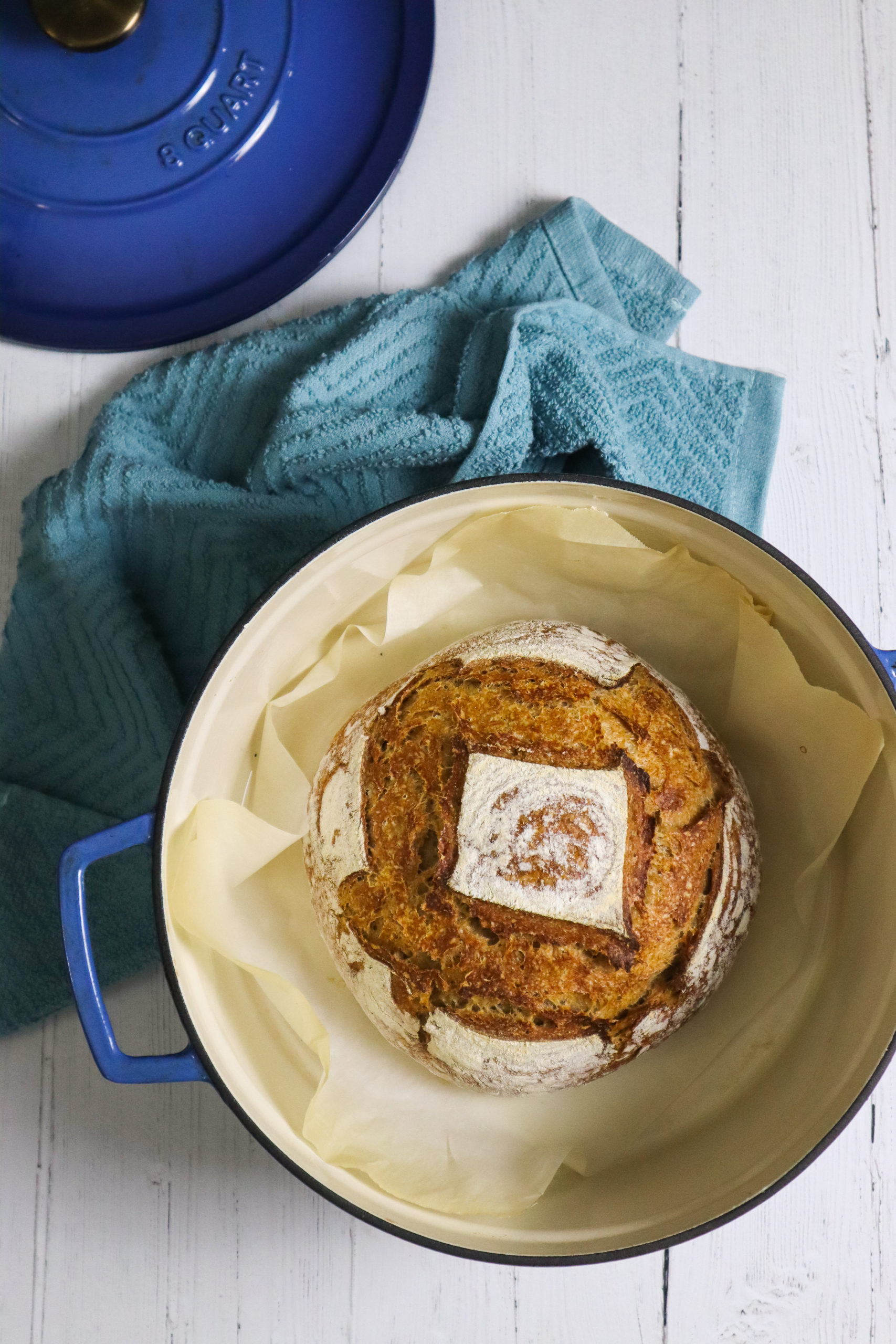
What started as a home fermentation project turned into a love for sourdough bread baking and its benefits for a healthier option.
My interest for fermentation and making things from scratch has led me to creating my first sourdough starter (that I named Dorian – which is, now, my low maintenance pet living in my refrigerator). A sourdough starter is a natural form of yeast created by flour and water. It is also the life force of what makes the bread sour, or tangy, from the fermentation process and is the leavening agent to give the loaves a good rise. Unlike commercial packaged yeasts often found in common bread recipes today, a starter is a lifetime commitment; you would often have to feed it the same amount of flour and water on a daily (or once a week once it’s fully matured), discard half the amount to maintain volume in order to keep it active. When I say lifetime, I mean, LIFETIME. There are existing starters that have lived since the 1800s! It is time consuming, I’m not going to lie, but I’ve invested my time and effort to give Dorian up for good.
The truth is, I am so over store bought bread and wanted to learn how to make my own. Living on Guam, buying artisanal or organic quality bread is very costly. I would buy organic whole wheat slices that would cost me nearly $8 for bread that has been sitting on the shelf for a while. It would, also, be my lucky day if I ever find artisanal bread on island because it is rare. Very rare. Not to mention, bread marketed as “healthy” is not necessarily healthy. Buying sourdough in our grocery stores have ingredients such as citric acid, emulsifiers, and all kinds of preservatives to keep the bread “fresh” on shelves – which, eighty-percent of the time, I’m a total health nut and care about what I put in my body.
So I did my research, literally joined sourdough forums and groups to learn about the process, and followed a lot of Instagram bakers who are into the world of sourdough. And holy guacamole! There is a community of sourdough bakers out there. A community that practiced on different flours, hydration levels of the dough, baking, scoring, everything! While that would be a sign of obsession over bread, I was enticed. So I got to baking and used my starter the moment it hit a month.
Flour, yeast, water, salt. If you ever wonder what REAL bread is made of, and bringing it back to the days when there was no technology for chemically leavened breads, no equipment, and wasn’t made for fast consumer consumption – it is really just flour, yeast, water, salt. And now at present, thinking about it, is bread really unhealthy? Or is it the artificial chemical agents that make it unhealthy?
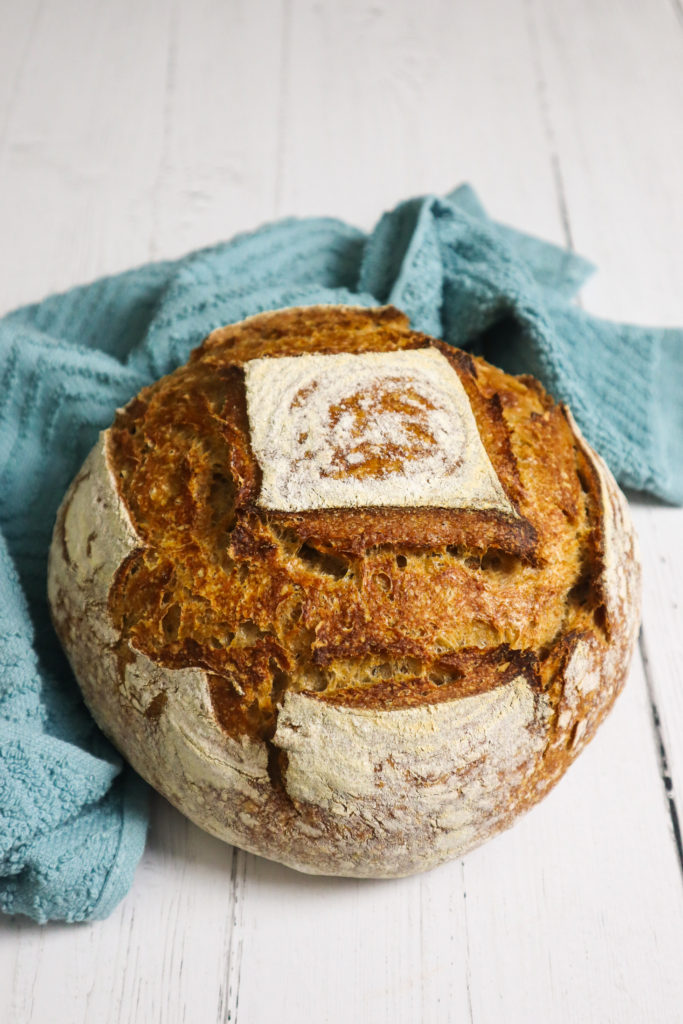
You see, sourdough bread is a two-day process that goes through a series of fermentation from start to finish. Like most fermented food, which contains good bacteria (lactobacilli), starches and sugars are converted to lactic acid – making fermented food such as kimchi, sauerkraut, kefir, or yogurt (for example) a great source of probiotic for better digestion. Sourdough works in the same way as the fermentation process neutralizes the phytic acid (a natural substance that impairs the absorption of minerals and nutrients), helps break down the carbohydrates, making the bread more digestible and would have a lower glycemic index compared to normal white breads. This is why people who are sensitive to gluten are, mostly, able to tolerate real sourdough bread.
While that sounded like a lot of science, in short, I’m trying to convince you to switch to sourdough bread because it is better for your body. Learn to make it on your own or be a little more conscious of the types of bread you buy and indulge in white breads every once in a while (not often). Don’t be afraid of carbohydrates!
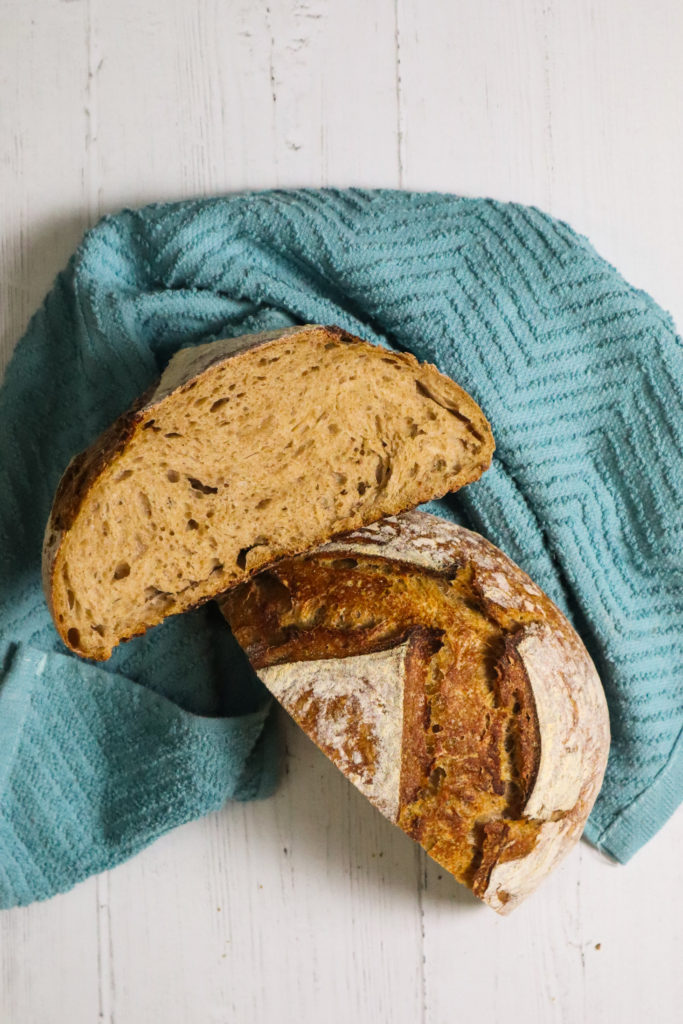
While this isn’t exactly a recipe post because I feel that my sourdough journey is just the beginning, let alone, something that I do for myself in times I feel in need of a meditation (the process is, rather, calming for me). I do encourage YOU to dive into the world of making food from scratch and with the simplest ingredients. Not only will you be able to heal your body from the toxicity of most processed foods these days but it gives you a sense of what food was like in the beginning. No, carbohydrates are not bad for you. Eating bread in moderation is not bad for you. What you need to be mindful of is what goes on into your bread – and other foods you consume.
If you ever find yourself interested on the side of sourdough bread making, leave me a comment in the comment section below or contact me. I’ll be happy to help out with what I know and learned from experience!
