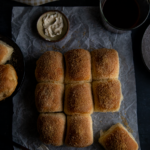
Vegan Pandesal (Softest Filipino Bread Rolls)
Servings 16 pieces
Equipment
- Mixing bowls
- Spatulas
- headstand mixer with dough hook or electric mixer (optional)
- Food processor (optional)
- measuring cups
- food scale (optional)
- cling wraps or clean dish towels
- sharp knife or bench scraper
- parchment paper
- large casserole dish (9x13), baking pan, or baking tray
Ingredients
FOR THE TANGZHONG
- 25 g (3 tbsp) unbleached all purpose flour
- 60 g (¼ cup) unsweetened plant milk (I used soy milk)
FOR THE DOUGH
- 320 g (1⅓ cup) unsweetened plant milk lukewarm between 95° - 100°F
- 5 g (2 tsp) instant yeast
- 500 g (4 cups) unbleached all purpose flour
- 50 g (¼ cup) granulated sugar
- 2 g (½ tsp) fine sea salt
- 60 g (4 tbsp) vegan butter softened to room temperature
- panko bread crumbs fine ground
Instructions
FOR THE TANGZHONG
- Using a small sauce pan, whisk together milk and flour together until all dry spots of the flour have dissolved. Place sauce pan on the stove top, in low heat. Continuously whisk mixture until it thickens to a thick paste consistency. This process takes between 2-3 minutes, or shorter, depending on your stovetop. Keep an eye on it so it does not burn or dry up.
- Turn off the heat. Transfer the paste/roux on a small saucer or ramekin. Spread the paste on a thinner layer to allow it to cool down faster. Cover with a damp cloth and set it aside.
FOR THE DOUGH PREPARATION
- Heat plant milk on a stove top or microwave to lukewarm (around 95° - 100°F). Remove from the heat. Do not make your milk any hotter than the given temperature, as this will kill your active yeast. Add the yeast into the milk. Cover for 5 minutes. You will know your yeast has been activated when it starts to foam on top of the liquid.Note: if your yeast has not foamed for more than ten minutes, this might mean your yeast is no longer fresh and is inactive. You'll have to purchase or use another packet.
- On a large mixing bowl combine all dry ingredients such as the flour, sugar, and salt. Thoroughly whisk. Then, prepare the Tangzhong paste and drop into the flour mixture.
- Using a headstand mixer with hook attachment(electric mixer or by hand), thoroughly mix the paste with dry ingredients until it is fully submerged. Then, gradually pour yeast and milk mix. Kneed the ingredients together until it turns into a cohesive dough. NOTE: Every flour works differently, do not pour the liquids all at once. You may or may not use all the liquids. It should result to a well hydrated, soft dough.
- Add the softened butter. Allow the butter to spread all over the dough and kneed until smooth and the is soft and smooth. This should take between 5-10 minutes on a headstand mixer. It may require extra time if you are doing it by hand. You'll know your dough is done if dough if it can stretch and feel more elastic.
- Grease a large mixing bowl with butter or oil and place your dough to rest covered with a damp kitchen towel or cling wrap. Leave it for an hour or until it has doubled in size. If you have a thermometer, the ideal dough temperature would be between 74° – 78°F to activate faster.
FIRST PROOF PREP
- Once your dough has doubled in size, punch down the gas and kneed on a smooth surface. Divide the dough into 16 equal pieces. Form each pieces into a ball by rolling it on a smooth surface. You can eyeball the size of each piece as best as you can. If you want to be precise, each dough ball should roughly be around 1" in diameter and about 60g in weight to make 16 pieces.If the dough is sticky to work with, you may lightly flour (or oil) your hands or the dough to work with. However, try to avoid using too much flour – your bread might result in dryness after baking.
- Coat each dough ball with breadcrumbs. If you find the breadcrumbs not sticking onto your dough pieces, you may lightly brush each piece with oil or coat with a cooking spray.
- Line each dough ball on a baking tray or glass casserole dish, leaving about 1½" breathing room to expand. Do not worry about spacing them apart too much as they will be touching after the second proof. Cover with a damp towel and let it rest for another hour or until it has doubled in size.
BAKING
- Preheat the oven to 350°F. Bake for about 30-35 minutes or until bread is golden brown on top. Best served when it is freshly baked with vegan cheese, butter, or peanut butter and a side of hot chocolate or coffee.
Notes
- For using panko bread crumbs – the finer the bread crumbs, the better. You can grind your panko bread crumbs on a food processor or blender beforehand. This, of course, is optional.
- Make sure your yeast is active - When making bread, the most important key is ensuring your yeast is active. To test it, drop dry yeast into a warm liquid (between 95-100 degrees Fahrenheit) with a teaspoon of granulated sugar. Allow it to dissolve and let it sit for 5-10 minutes. If the yeast has created a foam on top of the liquid, it means it is active and good for use. If not, the yeast packets may have been sitting in store shelves for a while and have lost its freshness.
- Use a casserole dish (or any oven friendly deep dish) - to get the best soft and fluffy result of your bread rolls. This will help capture steam in between the bread rolls, also helps preventing it from drying out. Baking trays will work fine, but keep in mind that it may result to building a harder crust.